LA PASSIONE DI ALBERGATORI
dedicata ai nostri Clienti!
- HOTEL
- VIAREGGIO
- Hotel Vittoria ***
- Hotel Villa Morgana **
- Lido di Camaiore
- Hotel Sirena ***
- Hotel Valdinievole **
- Marina e Pietrasanta
- Hotel Ermione ****
- Hotel Esplanade ***
- Hotel Grand'Italia ***
- Hotel Nettuno ***
- Hotel Residence Villa Marzia ***
- FORTE DEI MARMI
- Hotel ***
- LAST MINUTES
- Special Last Minutes
- Where HOTEL are
- Hotels' Maps

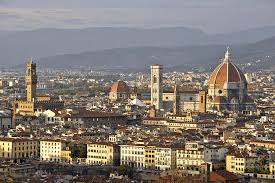
FIRENZE
85 km from Versilia
There was a surge in artistic, literary, and scientific activity in Florence from the 14th to 16th centuries. This was accompanied by significant economic growth and business activity. There was substantial private and public funding to sponsor artistic and scholarly endeavours. There were crises in the Roman Catholic church (especially the controversy over the French Avignon Papacy and the Great Schism). There were catastrophic results from the Black Death and a some re-evaluation of medieval values.

Florence is known as the “cradle of Renaissance” (la culla del Rinascimento) for its monuments, churches and buildings. The best-known site and crowning architectural jewel of Florence is the domed cathedral of the city, Santa Maria del Fiore, known as The Duomo. The magnificent dome was built by Filippo Brunelleschi. The nearby Campanile (partly designed by Giotto) and the Baptistery buildings are also highlights. Both the dome itself and the campanile are open to tourists and offer excellent views; The dome, 600 years after its completion, is still the largest dome built in brick and mortar in the world

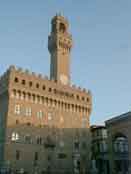
PALAZZO VECCHIO (old palace) is the most important civil building in the city of Florence. The construction, to plans by Arnolfo di Cambio, was begun in 1299. Initially it was the seat of the Priors of Art and of the Signoria. Temporarily it was housed by the Grand Ducal family under Cosimo I de' Medici before their transfer to Palazzo Pitti. It was in this period (1550-65) that Vasari transformed it, sumptuously redecorating the newly reconstructed interiors for the palace's rôle both as the seat of government and official residence of the ruling family. The entire palace is a museum, especially the so-called "Monumental Quarters". It is worth seeing the "Salone dei Cinquecento, the study of Francesco I de' Medici, the room of the Elements and the Hall of the Lilies. The Loggia dei Lanzi overlooks the big square Piazza della Signoria in front of the palace; there are several important statues, including "Perseus"by Cellini and "the Rape of the Sabine Women" by Giambologna.
The CATHEDRAL ("Duomo") is dedicated to Santa Maria del Fiore and is typical of Italian Gothic architecture. The present building was designed by Arnolfo di Cambio (1245-1302), one of the greatest architect-sculptors of his age. Finished in around 1367 it was completely covered with coloured marbles like the earlier Baptistery, earlier Baptistery, although the uncompleted facade was given its covering in the nineteenth century
Inside are several important works of art, offset by the architecture's taut Gothic forms, completely different from medieval buildings north of the Alps. Of primary importance are the two frescoes on the right-hand wall showing the equestrian monuments of the "condottieri" (generals) by Paolo Uccello (1436) and Andrea del Castagno (1456).Many of the sculptures from the Duomo are now kept in the Museum of the "Opera del Duomo" but others are still in place, such as the lunettes by Luca della Robbia above the doors of the Sacristy or the bronze door of the Mass Sacristy and the great Pietà by Michelangelo. The splendid stained glass windows should not be forgotten, mainly executed from 1434-1445 to the designs of such important artists as Donatello, Andrea del Castagno and Paolo Uccello. Also notable are the wooden inlays of the Sacristy cupboards to the designs of Brunelleschi, Antonio Del Pollaiolo and others
Boboli Gardens
Together with Pitti Palace, in 1550 the Medici bought the Boboli gardens behind the building. The name of Boboli is thought to come from the prior owner.
Nicolò Pericoli, called the "Tribolo", was called in to transform the area into one of the most spectacular Renaissance gardens. Pericoli worked at what he called his "green architecture" masterpiece until he died.
With the intervention and mannerist inventions of famous artists like Buontalenti (who created the Large Cave), Michelangelo (whose Prisons decorated the four corners of the Cave itself, before being replaced by concrete copies and transferred to the Academy Gallery) and Giambologna, Boboli became a model for all European Royal gardens, including those in the Palace of Versailles.
Besides the above mentioned Large Cave, you should visit the Amphitheatre, the Basin and the Island Tank, originally meant for the cultivation of flowers and citrus fruit trees, one of the gardens most evocative scenarios.
 Michelangelo
 Leonardo da Vinci
 Lorenzo dei Medici
10 Years of...
...di alberghiinversilia
Special Offer
All our special offers appositely for you! >>
Pubblicità
Spot